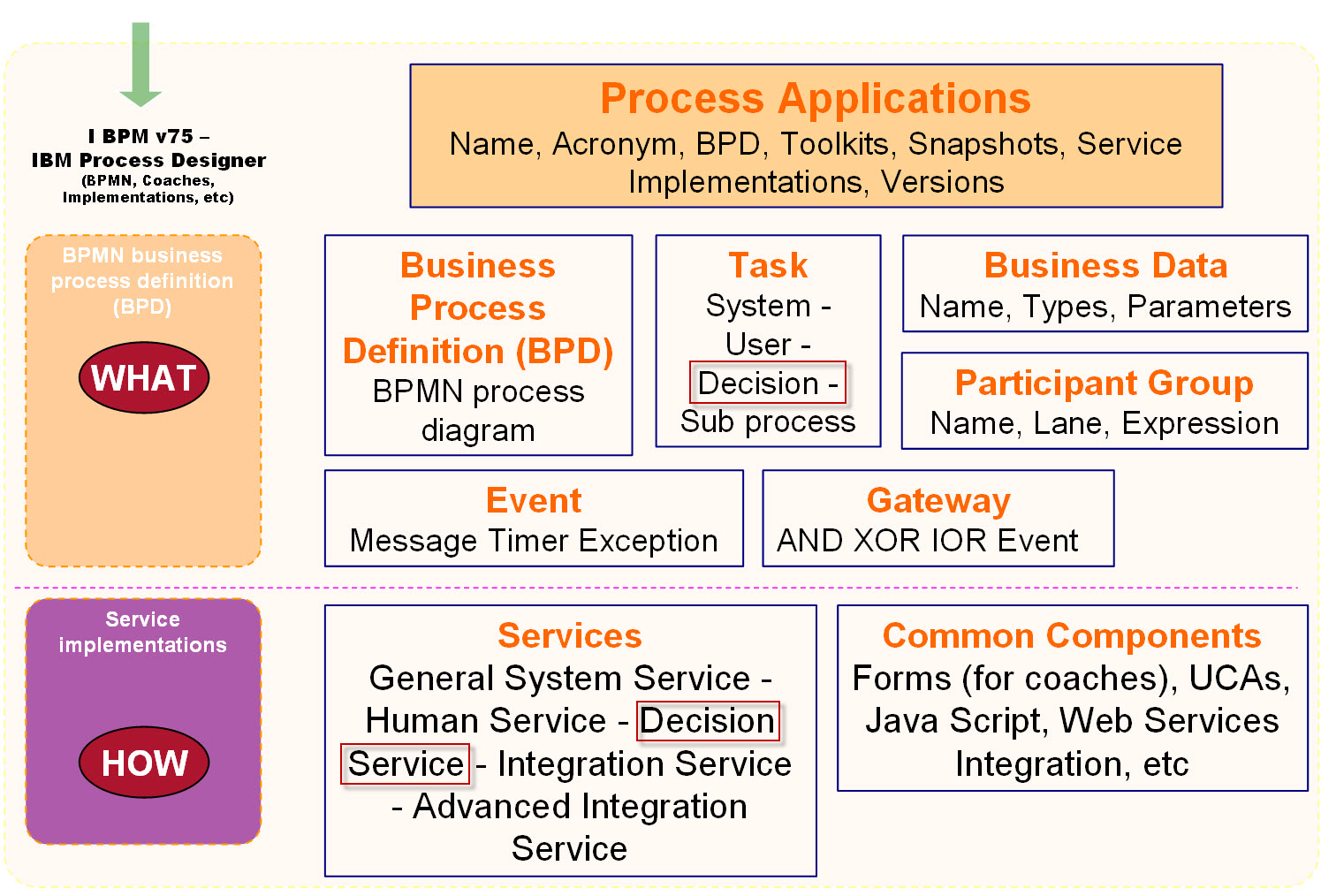
These decision tasks are conform with the task type ‘decision node’ identified in the BPMN 20 standard. The combination of Business Process Management and Business Rules Management is very powerful: Business rules are expected to be changed more often than the process rules defined at the gateways used in the business process models. It is therefore smarter to externalize the business rules to be able to change them without having to change the business process itself.
IBM Business Process Manager includes decision tasks allowing for designing business rules based in the data available to the business processes. The result of the business rules can then be further used at process gateways for process navigation.
This sample explains to some level of detail how to make use of decision services using so-called BAL (Business Action Language) rules when designing business processes. The BAL Rule component provides a rule editor that allows rule designers to author business rules using natural language technology. Using natural language, instead of JavaScript, to author rules means that no programming expertise is required to create business rules, and the rules are easier for people to read and understand.